
Thailand's elephant early warning system
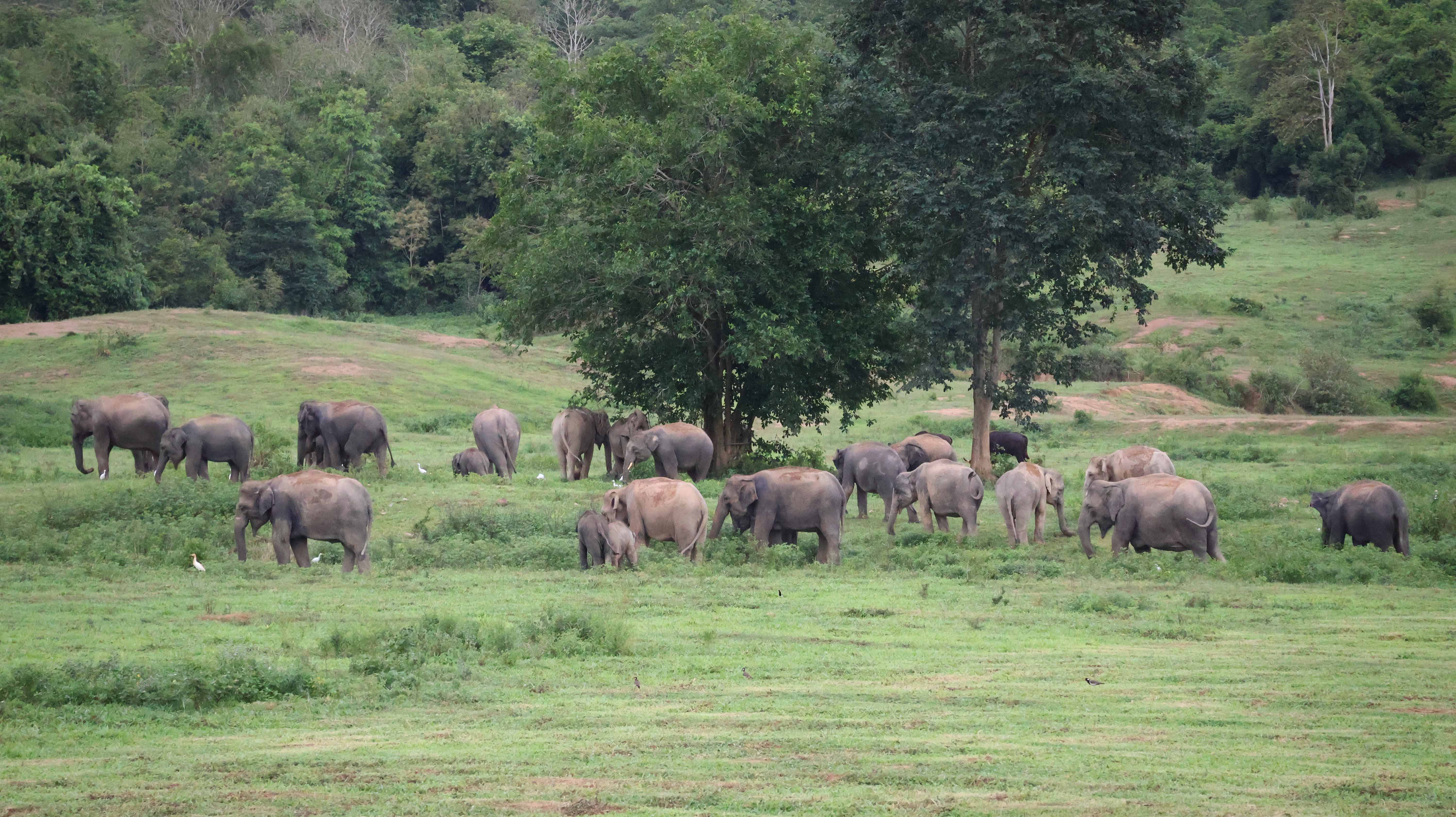
Across four landscapes in Thailand, the boundary between forest and farmland is a nightly negotiation. Wild elephants emerging from protected areas to raid durian and jackfruit orchards, pineapple fields, and cassava plantations bring real economic harm — and sometimes physical danger — to farming communities that have lived alongside them for generations. A new initiative is using the EarthRanger platform, AI, camera-trap technology, and community-driven data collection to change that.
The project spans Khao Soi Dao-Khao Ang Rue Nai in the east, Khao Yai in the central highlands, the southern Western Forest Complex, Kuiburi, and Khao Luang in the south. It brings together Ecoexist Society, Zoological Society of London (ZSL) and Bring the Elephant Home, the Thailand Department of National Parks, Wildlife and Plant Conservation, Mahidol University, King Mongkut's University of Technology (KMUTT), farming communities, conservation scientists, and the EarthRanger’s Asian team around a shared goal: an early warning system that puts real-time information about elephant movements into the hands of the people who need it most.
.png)
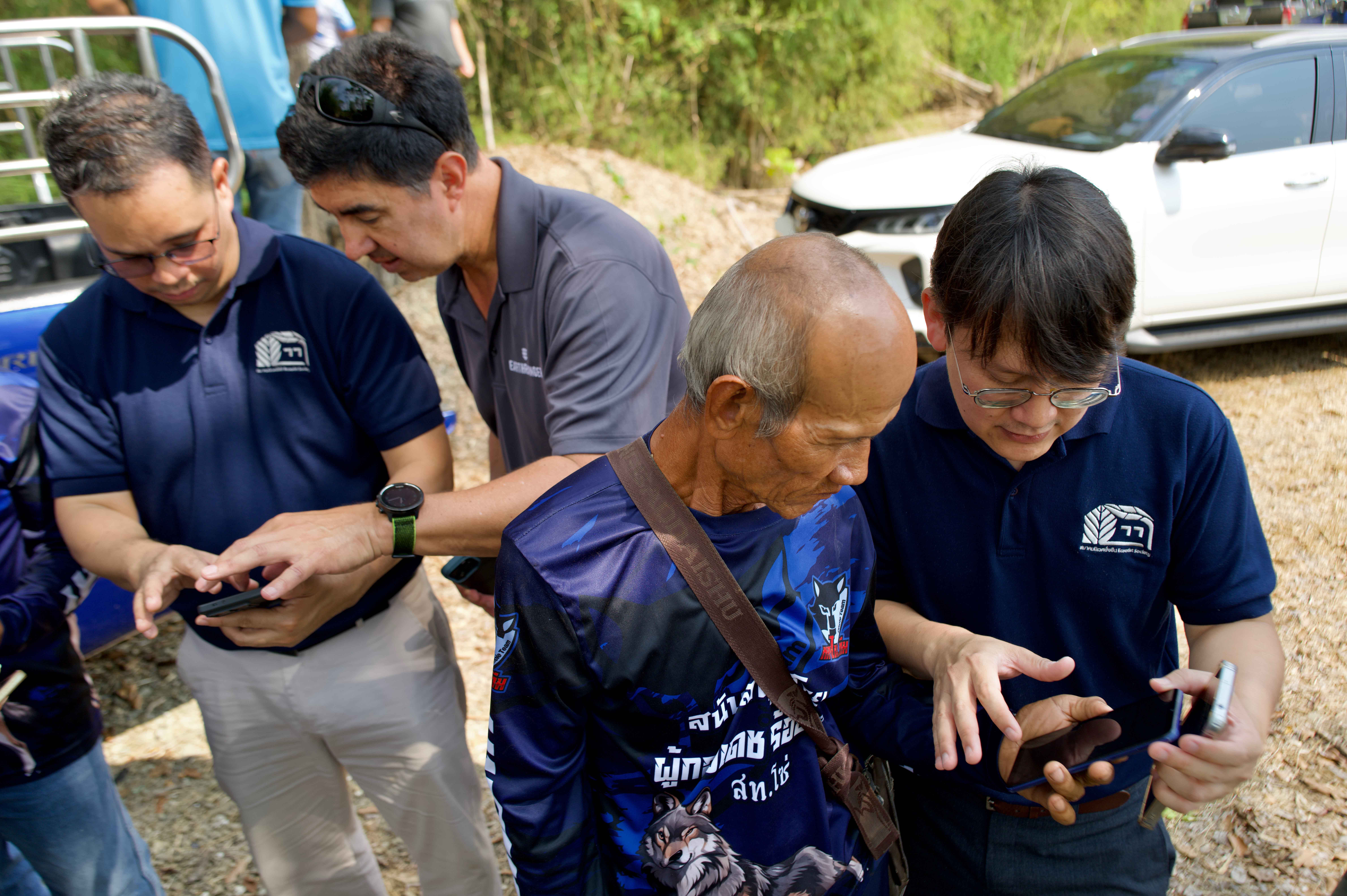
At the heart of the system is a customized Thai-language EarthRanger mobile app through which community members document elephant observations, crop-raiding incidents, property damage, and injuries directly from their phones. At Kuiburi National Park, 64 AI-enabled camera traps across 32 farms along the park’s border are capturing photos and videos of crop foraging behavior, enabling researchers to identify 25 individual elephants since the project began in November 2025. Of those cameras, 16 are SMS-integrated and have transmitted more than 400 real-time wildlife detection alerts automatically to EarthRanger via Wildlife Protection Solutions’ wpsWatch. When an elephant is detected moving toward a known crop area, alerts reach 25 community rangers across five response teams within minutes, allowing them to mobilize and guide elephants back into the forest before serious damage occurs.
.jpg)
EarthRanger Mobile has also expanded field documentation capacity. Field teams at Kuiburi have logged 724 individual elephant detections, 235 elephant group detections, including group size, structure, and demographics, and 72 detections of other mammals of conservation concern, among them dhole, gaur, and leopard. That last figure points to something broader: the data being collected for conflict mitigation is simultaneously building a documented record of wildlife presence across the landscape, giving researchers a richer ecological picture than any single-species monitoring effort could produce on its own.
For Bring the Elephant Home, the shift has been as much organizational as operational. As Ave Owen, Elephant Research Programme Manager, describes it: "Deploying and maintaining the cameras and responding to AI-assisted alerts has aligned local farmers, park managers, response rangers, and Bring the Elephant Home's field staff in a unified effort with shared decision-making. Visual data from the cameras has enabled individual-level elephant identification, and each early warning system detection is informing individual-level spatio-temporal profiles that support a transition from reactive to predictive human-elephant conflict mitigation.
The system also integrates Global Forest Watch fire and deforestation alerts across all four landscapes. Human-lit fires are among the most significant drivers of human-elephant conflict in Thailand: when forest habitat is degraded by repeated burning, elephants are displaced from their home ranges and increasingly drawn to the reliable food sources that farmland provides. Global Forest Watch alerts feed directly into EarthRanger, directing ranger patrols to sensitive areas before habitat loss reaches the point of forcing elephants out — connecting fire monitoring, forest condition, and elephant behaviour within a single operational platform.
Every observation logged, every camera triggered, and every incident reported builds a growing spatial picture of elephant movement patterns across all four landscapes. Researchers at Mahidol University and KMUTT are using this data to identify the corridors, timing, and conditions that predict raiding events, turning community experience into evidence that can inform longer-term land management and conflict mitigation strategies.
What makes this initiative distinctive is not the technology alone, but the integration of community knowledge with scientific analysis and government engagement. The communities are not simply sensors in a system designed by others — they are active participants whose observations and response capacity are central to whether the early warning system works. For Thailand's farming communities living adjacent to protected forests, a night without crop loss is a victory. The goal of this collaboration is to make those nights more frequent.
Related Posts
Cameroon and Chad
Central African Republic
Democratic Republic of Congo