
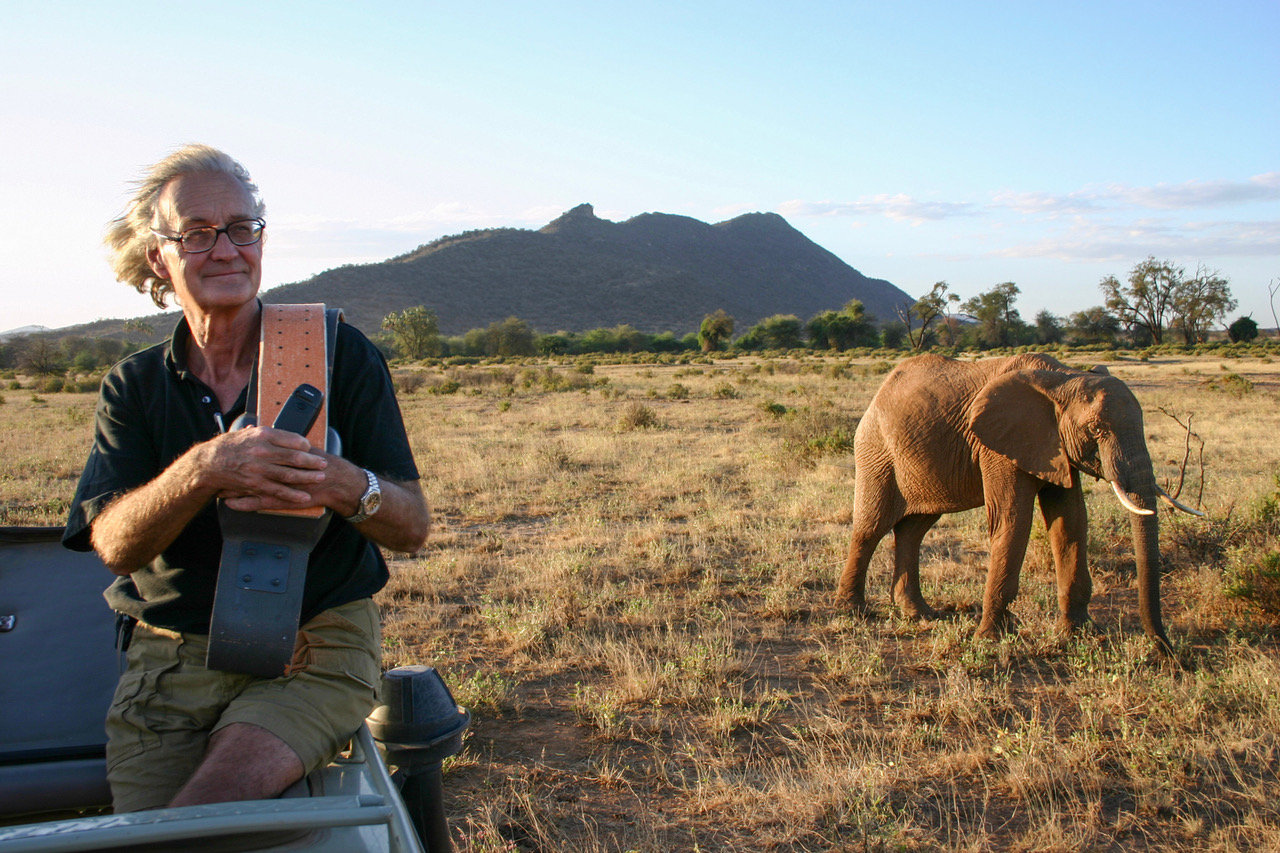
Dr. Iain Douglas-Hamilton (aged 83), who sadly died today, was one of the world’s foremost authorities on African elephants, a scientist whose work shaped modern conservation. He was also a trusted friend to many, including those of us who had the privilege to work alongside him. And for EarthRanger, it has long been an honor that our story is tied, even in a small way, to his.
Iain’s influence stretches back more than half a century. In 1968, he began radio-tracking elephants in Tanzania, becoming the first to use radio collars to map their movements in detail. This work revealed that elephants followed specific pathways, made distinct choices as individuals, and navigated landscapes with remarkable memory. His 1972 doctoral thesis established principles that still underpin modern elephant ecology.
His early studies did more than reveal how elephants moved; they changed how people understood them. He helped shift how many people think about animals as individuals rather than anonymous parts of a landscape. As the late Jane Goodall said in A Life Among Elephants, a documentary about Iain’s life and work, he showed that “each elephant has personality, individuality, and sentience.” Long before “connectivity” became standard conservation language, his work mapping elephant corridors to show how individuals chose to move through landscapes — and why blocking those generational routes intensified conflict. His work gave elephants and other wildlife a voice at the table and pushed coexistence to the center of conservation practice.
As poaching escalated in the 1970s and 80s, Iain understood that conservation needed hard numbers to confront the crisis. His continent-wide surveys showed that Africa had lost roughly half its elephants to the ivory trade, helping build the momentum that led to the 1989 CITES ivory ban. He often captured the reality in a single truth: “You cannot fight to save something if you do not know how many you are trying to save.” When poaching surged again decades later, his influence was felt once more, playing a key role as part of the Great Elephant Census, which revealed a 30 percent decline in savanna elephant populations in just seven years.
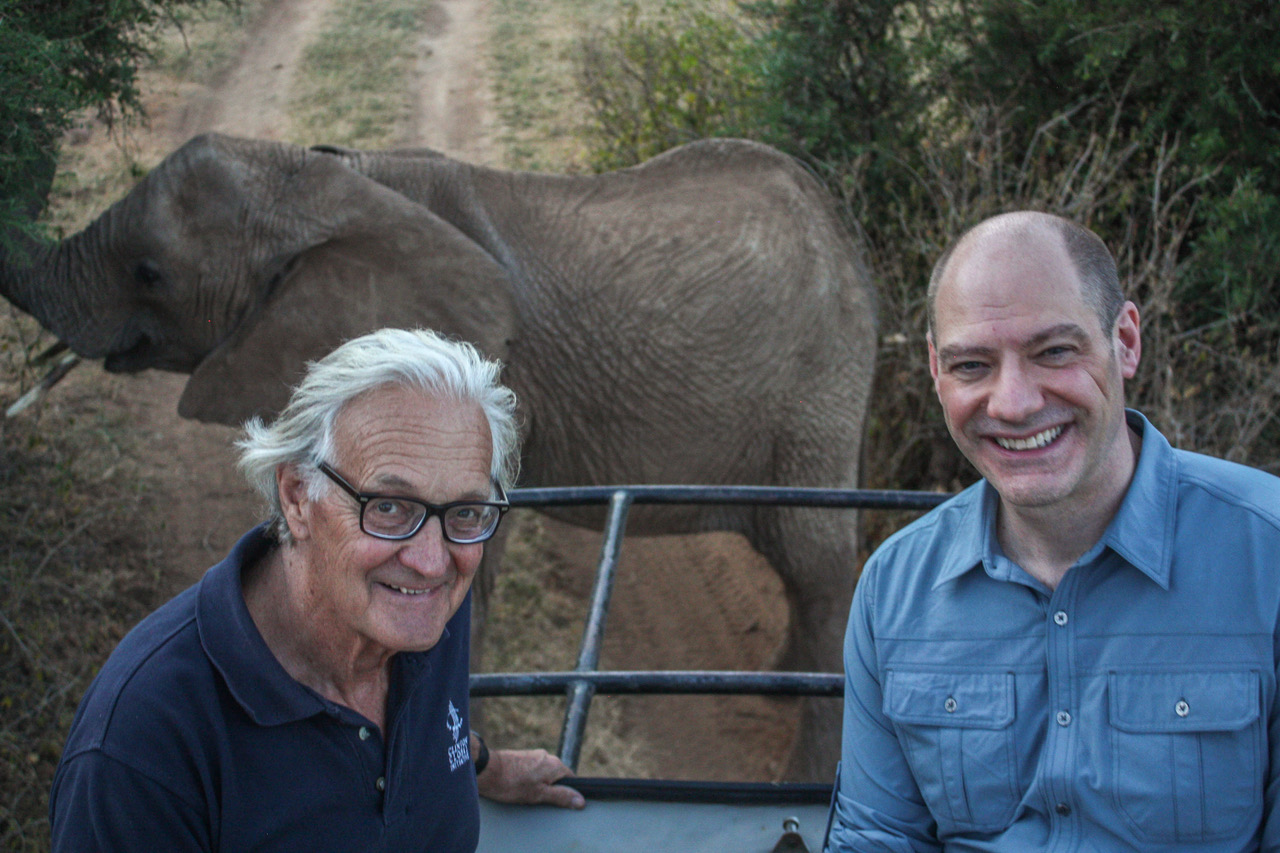
That’s where EarthRanger’s story intersects with Iain. From the moment he pioneered the first radio-collaring of elephants in the 60’s, he had been pushing for better ways to understand where elephants moved and why. When the late Paul G. Allen launched the Great Elephant Census to establish a clearer picture of the elephant crisis, it underscored the essential role of timely information in protecting elephants. The tracking system Iain and his team built at Save the Elephants was already doing that work on the ground, and it became the foundation for the collaboration that followed. That joint effort became the beginning of what would evolve into EarthRanger. Both he and Paul saw that conservation depended on knowing what was happening on the ground, and knowing it fast enough to do something about it.
“Iain Douglas-Hamilton had a single-minded focus, a world always full of elephants,” said EarthRanger’s co-founder Ted Schmitt. “He pioneered new ways to use technology and data so we humans could understand, act, and care to protect them. We will miss him greatly. We will be forever grateful for his legacy and inspired to carry on his work as best we can.”
Iain wasn’t just a scientist. He was a connector. He brought governments, funders, researchers, NGOs, and industries into the same conversation. When he co-founded the Elephant Crisis Fund in 2013, he helped build a continent-wide engine for collaboration, driving knowledge-sharing across Africa, supporting anti-poaching and anti-trafficking work, and strengthening efforts to reduce demand for ivory. His work reached far beyond a single organization or country.
Many of today’s leaders in movement ecology and conservation technology learned directly from him, including our own Dr. Jake Wall, EarthRanger’s co-founder, who shared an Esmond B. Martin Royal Geographic Society award with Iain earlier this year for these contributions to conservation and geographical science. Jake’s work, especially in building tools that help conservationists understand wildlife movements and make better decisions on the ground, carries forward Iain’s conservation legacy.
“Not only was Iain a powerhouse scientist, but he also led anti-poaching teams on the ground, counted carcasses from the sky, and shaped policy at the highest levels,” said Dr. Wall. “It was this combination of research and conservation action that was so effective and has been an inspiration to all of us.”
For EarthRanger, losing Iain means losing someone who shaped our earliest thinking and remained a true friend ever since. He approached data as memory, a way to hold onto what was happening in the field so it could inform what happened next. Anyone who presented to him remembers him quietly taking a photo of a slide to return to the details later - his chronofile. And anyone meeting him for the first time remembers the quick selfie, his way of keeping track of the person behind the work. That was who Iain was. He was genuine, warm, and always looking to lift up the people around him, which is why those small moments will stay with anyone who had the chance to meet him. He was always learning, always cataloging, always asking what information could do for elephants, for communities, and for people living with wildlife.
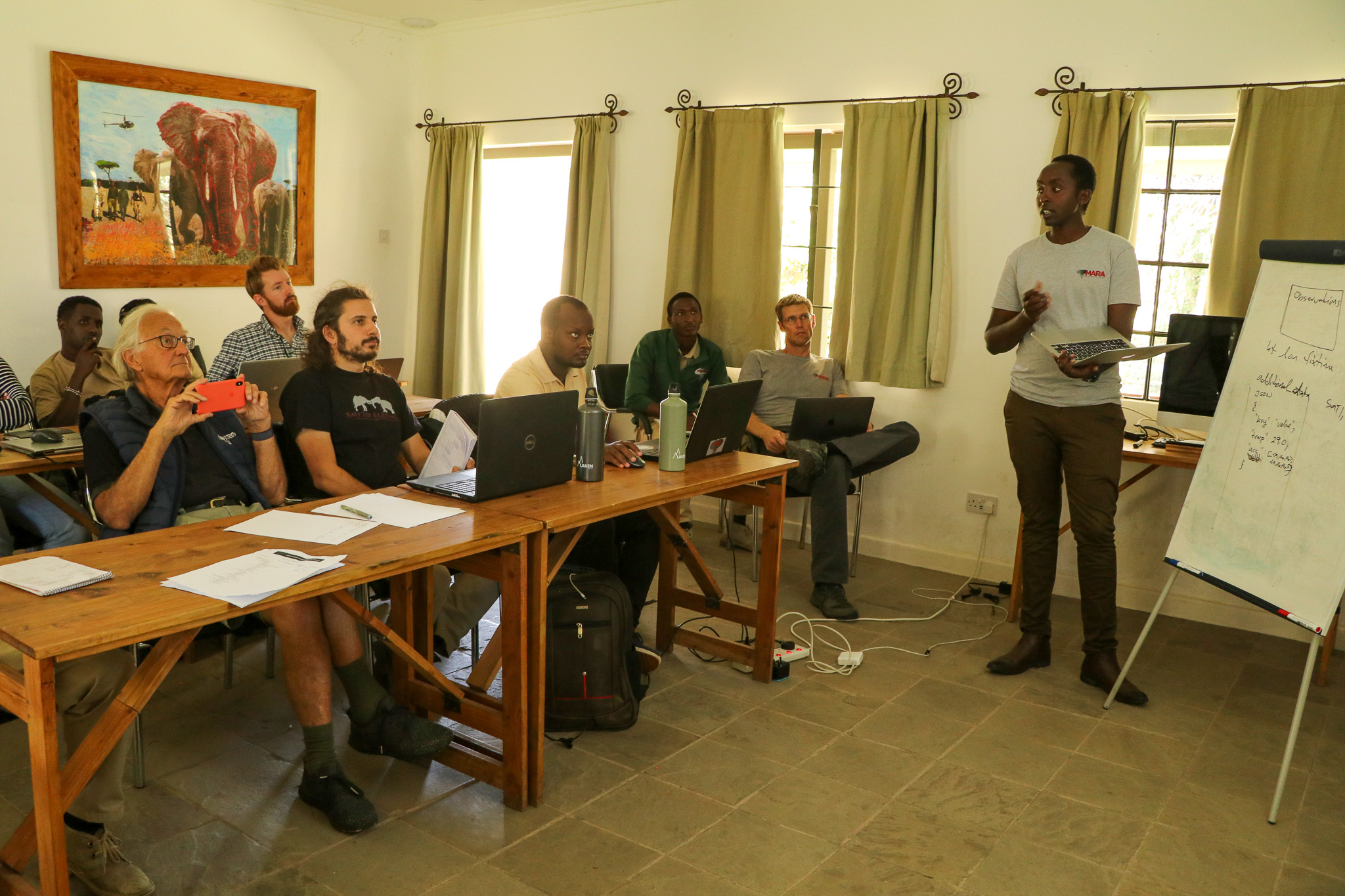
Save the Elephants, our dear friends and EarthRanger’s original user, is the clearest expression of his legacy. But that legacy also runs through every system, collaboration, and idea shaped by his work. EarthRanger carries a piece of that history not because it was his creation, but because it was built on principles he believed in: clear data, shared insight, and technology to support people working to protect wildlife.
Iain spent his life helping the world understand elephants on their own terms, protecting the landscapes they rely on. His work reshaped conservation and gave countless people a clearer sense of what’s at stake and what can still be saved. We will miss him dearly, and every day we will continue to be inspired by his legacy as we carry on his mission.